 Admin
Admin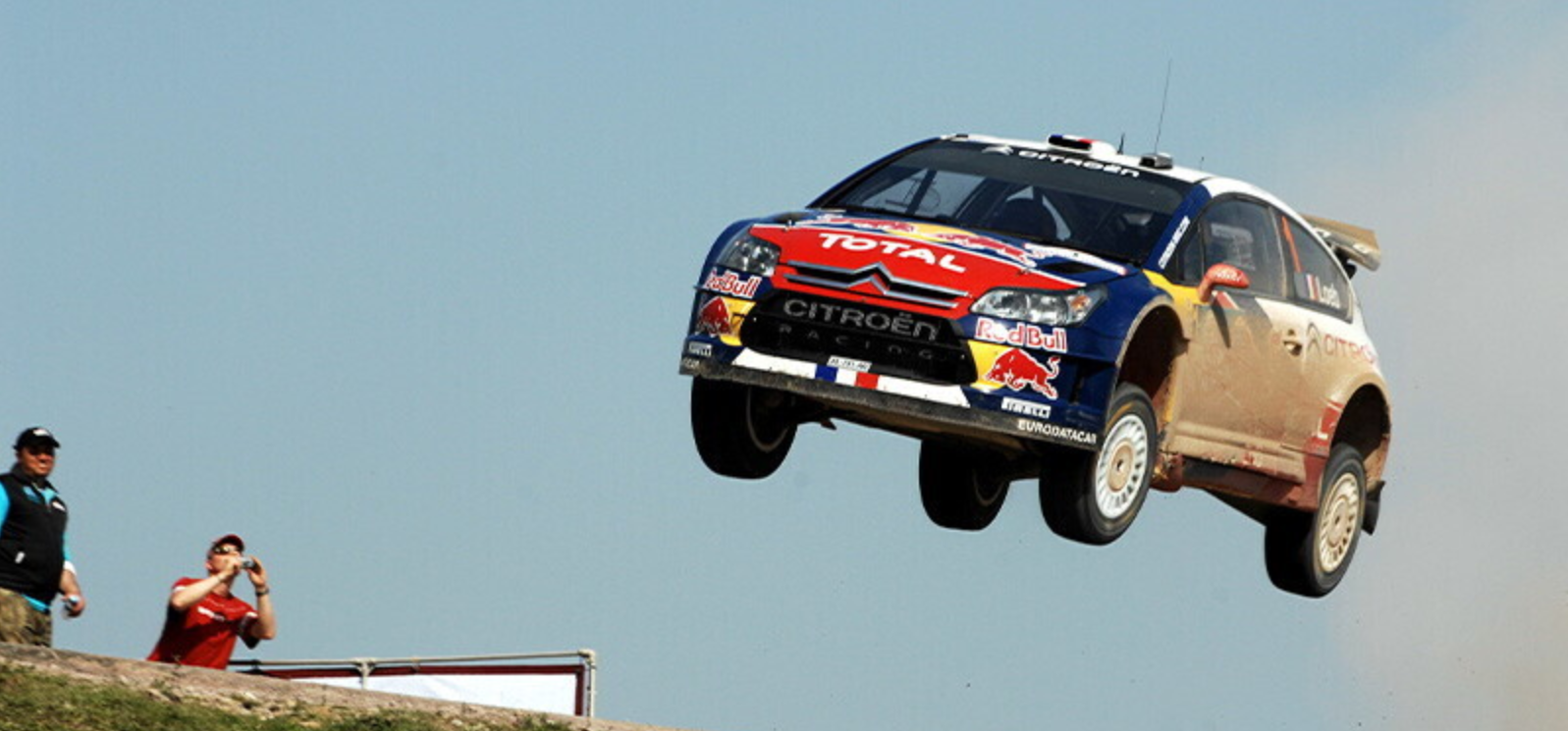

Introduction
In the adrenaline-fueled world of rally racing, where precision, durability, and innovation collide, one name stands out like a blazing comet: Citroën. Dubbed the “Raging Red Bull” for its fiery red livery and unrelenting dominance, Citroën has carved an indelible legacy in the World Rally Championship (WRC) and beyond. From its pioneering engineering to its championship-laden trophy cabinet, Citroën’s journey is a testament to its relentless pursuit of excellence. This editorial delves into Citroën’s storied history, its rally racing supremacy, groundbreaking innovations, and its strategic foothold in the Indian market, where its robust engineering and thoughtful engine choices set it apart.

A Storied History of Innovation
Founded in 1919 by André Citroën, the French automaker quickly established itself as a beacon of innovation. Citroën’s early models, like the Traction Avant (1934), introduced front-wheel drive, a unibody chassis, and four-wheel independent suspension—features that revolutionized automotive design and remain standard today. The iconic Citroën DS (1955), with its futuristic aesthetics and hydropneumatic suspension, redefined luxury and ride comfort, earning accolades for its forward-thinking engineering. These early innovations laid the groundwork for Citroën’s motorsport ambitions, where its penchant for pushing boundaries would shine brightest.
Citroën’s motorsport journey began in the 1950s with the DS and ID models competing in long-distance rallies like the Monte Carlo Rally, which it won in 1959. The brand’s focus on marathon rallies showcased its ability to build durable, comfortable vehicles capable of enduring grueling conditions. By the 1980s, Citroën Racing, officially established in 1989, became a powerhouse, transitioning from rally raids to the WRC, where it would dominate for decades.

Rally Racing Prowess: The Red Bull’s Charge
Citroën’s rally racing legacy is synonymous with dominance, particularly in the WRC, where it competed from 1998 to 2019. The Citroën Total World Rally Team, powered by drivers like Sébastien Loeb, the most successful WRC driver in history, redefined the sport. Loeb, alongside co-driver Daniel Elena, clinched nine consecutive drivers’ titles from 2004 to 2012, a feat unmatched in WRC history. Citroën’s manufacturer championships in 2003, 2004, 2005, 2008, 2009, 2010, 2011, and 2012 further cemented its supremacy.
The Xsara WRC, introduced in 2001, marked Citroën’s first major WRC success, winning the manufacturers’ title in 2003. Its robust four-wheel-drive system, advanced aerodynamics, and turbocharged 2.0L engine made it a formidable contender. The C4 WRC (2007–2010) took reliability to new heights, finishing every rally in 2010—a rare achievement in the sport. With 320 hp and 430 lb-ft of torque, the C4 WRC, driven by Loeb, dominated asphalt rallies, showcasing Citroën’s engineering precision. The DS3 WRC (2011–2016) continued this legacy, securing titles in 2011 and 2012 with its compact design and enhanced performance.
Citroën’s rally cars weren’t just fast; they were resilient. The C3 WRC (2017–2019), driven by Sébastien Ogier, demonstrated versatility across diverse terrains, from Monte Carlo’s icy roads to Finland’s rugged gravel. Despite withdrawing from WRC in 2019 due to a lack of top-tier drivers, Citroën’s 36 rally wins and eight manufacturer titles remain a benchmark of excellence.

Trophies and Accolades
Citroën’s trophy cabinet gleams with accolades from its rally conquests. Beyond its eight WRC manufacturer titles, the brand secured numerous individual rally victories, including iconic events like Rally Monte Carlo, Rally Argentina, and Rally Finland. The Xsara Kit Car’s outright wins in the 1999 Rally Catalunya and Tour de Corse against more powerful four-wheel-drive cars prompted the FIA to revise regulations, underscoring Citroën’s disruptive impact.
In rally raids, Citroën’s ZX won the Paris-Dakar Rally four times in the 1990s, driven by legends like Ari Vatanen. The brand’s success extended to national championships, with drivers like Philippe Bugalski winning French Rally Championship titles in 1998 and 1999. These victories not only highlighted Citroën’s engineering prowess but also elevated its global brand image, associating it with performance and reliability.
Loyal Partnership with Total Lubricants
A cornerstone of Citroën’s rally success has been its enduring partnership with Total Lubricants, a collaboration that has fueled its dominance in the WRC and beyond. Since the inception of the Citroën Total World Rally Team, Total has invested heavily in Citroën’s motorsport endeavors, developing high-performance lubricants tailored for the extreme demands of rally racing. These specialized oils and fluids, designed to withstand high temperatures and intense mechanical stress, have optimized the performance of Citroën’s turbocharged engines, ensuring reliability across grueling terrains. Total’s technical expertise has also contributed to Citroën’s engineering advancements, with joint research enhancing engine efficiency and durability. Across all Citroën vehicles, from rally cars like the C4 WRC to consumer models like the C5 Aircross, only Total lubricants are used, a testament to the brand’s trust in Total’s quality. Citroën’s rally cars proudly display the Total logo, their red and blue color scheme echoing Total’s iconic branding, symbolizing a synergy that has powered countless victories. This partnership extends to Citroën’s production vehicles in markets like India, where Total lubricants ensure long-term engine health, reinforcing the brand’s rally-inspired reliability.
Groundbreaking Innovations
Citroën’s rally success is rooted in its innovative engineering, which has influenced both motorsport and consumer vehicles. Two standout innovations—hydropneumatic suspension and steering wheel design—deserve special mention.
Hydropneumatic Suspension: The Magic Carpet Ride
Introduced in the 1955 Citroën DS, the hydropneumatic suspension system uses compressed gas and liquid to absorb shocks, providing a smooth, self-leveling ride. This technology proved invaluable in rally systems, where maintaining control over uneven terrain is critical. The Citroën BX 4TC, despite its Group B struggles, leveraged managed this suspension for superior comfort and traction. In consumer models like the C5 Aircross, this system ensures a “magic carpet” ride, setting Citroën apart in India’s SUV market.
The suspension’s ability to maintain constant ride height under varying loads inspired other manufacturers, including Rolls-Royce, which licensed the technology for its Silver Shadow. In rallying, it allowed Citroën’s DS and CX models to excel in long-distance events, as drivers remained less fatigued compared to competitors.
Steering Wheel Innovation: A Bugatti Connection
Citroën’s steering wheel designs, particularly in rally cars, prioritized driver control and feedback. The C4 WRC’s steering wheel, festooned with colorful buttons for quick access to critical functions, was a precursor to modern high-performance vehicles. This design philosophy influenced Bugatti’s Tourbillon hypercar, launched in 2025, which features a fixed-hub steering wheel with an integrated instrument cluster for enhanced driver focus. The Tourbillon’s adjustable steering wheel and pedal setup, inspired by motorsport, echoes Citroën’s rally-derived ergonomics, showcasing the rally’s lasting impact on premium automotive design.
Other Innovations
Citroën’s rally cars pioneered advanced aerodynamics, sequential gearboxes, and turbocharged engines, many of which trickled down to production models. The Xsara WRC’s lightweight chassis and optimized center of gravity improved handling, while the DS3 WRC’s 1.6L turbo engine balanced power and efficiency. These advancements enhanced Citroën’s reputation as an innovator, influencing competitors like Peugeot and Ford.
Inspiring The Quality
Inspiring the Automotive and Racing industry, Citroën’s rally dominance inspired a generation of automakers and racers. Its success with the Xsara, C4, and DS3 WRC demonstrated that compact, reliable cars could outperform larger, more powerful rivals, prompting manufacturers to prioritize efficiency and durability. The brand’s focus on driver-centric engineering influenced rally car design, with competitors adopting similar aerodynamic and suspension strategies.
Citroën’s technological trickle-down effect is evident in its production models. The C5 Aircross’s hydropneumatic suspension and the eC3’s robust build quality reflect rally-derived durability. The brand’s motorsport success also boosted its global image, attracting performance enthusiasts and reinforcing its commitment to innovation. In India, Citroën’s rally heritage lends credibility to its vehicles, appealing to consumers seeking reliable, high-quality cars.
Fighter plane-inspired front grill (Logo)
Citroën’s connection to aviation also influenced its iconic front grille design, drawing inspiration from the Vought F4U Corsair, a World War II fighter plane renowned for its distinctive bent bird wing design. This gull-wing shape, which gave the Corsair its aerodynamic prowess, inspired the sleek, curved lines of Citroën’s early front grilles, notably in models like the DS. The bent wing aesthetic not only reinforced the brand’s aviation heritage but also evolved into a visual echo of the chevron logo, blending form and function. This design choice, rooted in the Corsair’s bold silhouette, underscored Citroën’s commitment to marrying aesthetic innovation with performance, a legacy that continues to shape its modern vehicles.
Citroën’s Supremacy in India: EVs and Private Transportation
Since entering India in 2021, Citroën has carved a niche in the private cab and transportation sector, particularly with its electric vehicle (EV) offerings. The Citroën eC3, a compact EV hatchback, has become a favorite among fleet operators due to its 320 km range, spacious interiors, and low maintenance costs. Its robust build quality, derived from rally-inspired engineering, ensures durability on India’s challenging roads, making it ideal for urban mobility solutions like Ola and Uber.
The C5 Aircross, a premium SUV, offers a diesel variant tailored for long-distance travel, appealing to tour operators. Citroën’s focus on comfort, with features like hydraulic suspension and ergonomic seating, aligns with the demands of India’s private transportation sector, where passenger satisfaction is paramount. Upcoming models like the Basalt EV and eC3 facelift promise to strengthen Citroën’s EV leadership, supporting India’s push for sustainable mobility.
Engine Strategy: The 1200 cc Advantage
In India’s competitive automotive market, Citroën stands out by offering 1.2L three-cylinder naturally aspirated (NA) and turbocharged engines across its lineup, including the C3, eC3, and Basalt. Unlike rivals like Tata, Hyundai, Suzuki, Mahindra, Volkswagen, and Skoda, which have embraced sub-1.0L (998 cc) three-cylinder turbo and NA engines, Citroën’s 1.2L engines prioritize reliability and performance.
Sub-1.0L engines, often paired with turbochargers and gasoline direct injection (GDI), are prone to reliability issues in India’s hot climate. With air conditioning (AC) running constantly, these engines face a significant load, leading to premature wear, especially in three-cylinder configurations. The smaller displacement distributes stress unevenly, resulting in rougher operation and higher repair costs. In contrast, Citroën’s 1.2L engines, with a larger capacity, distribute load more evenly, run smoother, and last longer. The turbo variant delivers 110 hp, balancing power and efficiency, while the NA version offers 82 hp for budget-conscious buyers.
Citroën’s decision to avoid sub-1.0L engines reflects its rally-derived focus on durability. While four-cylinder engines are ideal, India’s emission norms and fuel efficiency standards favor three-cylinder designs. Citroën’s 1.2L engines strike a perfect balance, offering robust performance without compromising longevity. The brand also provides a 2.0L diesel option in the C5 Aircross, catering to high-mileage users who value torque and fuel economy.
Build Quality: A Rally-Inspired Foundation
Citroën’s cars are renowned for their exceptional build quality, a legacy of its rally heritage. Models like the C3 and eC3 feature sturdy chassis and high-quality materials, ensuring durability on India’s pothole-ridden roads. The C5 Aircross, with its premium interiors and reinforced structure, rivals luxury SUVs, offering a refined driving experience. User reviews praise Citroën’s low maintenance costs and spacious cabins, attributes honed through decades of rally engineering.
In India, where competitors often cut corners to reduce costs, Citroën’s commitment to quality stands out. Its vehicles undergo rigorous testing, drawing on rally-derived standards, to ensure they withstand diverse conditions. This focus on durability enhances Citroën’s appeal in the private cab sector, where uptime is critical.
FAQs
1. What is Citroën’s most successful rally car?
The Citroën C4 WRC, used from 2007 to 2010, is considered its most successful, winning every asphalt rally and finishing all events in 2010.
2. How many WRC titles did Citroën win?
Citroën won eight WRC manufacturer titles (2003, 2004, 2005, 2008–2012) and supported Sébastien Loeb’s nine drivers’ titles (2004–2012).
3. What is hydropneumatic suspension?
It’s a Citroën-developed system using compressed gas and liquid for a smooth, self-leveling ride, debuted in the 1955 DS and used in rally and consumer cars.
4. How did Citroën influence Bugatti’s steering wheel design?
Citroën’s rally car steering wheels, with integrated controls, inspired Bugatti’s fixed-hub steering wheel in the Tourbillon for enhanced driver focus.
5. Why does Citroën use 1.2L engines in India?
Citroën’s 1.2L three-cylinder engines offer better reliability and smoother operation than sub-1.0L engines, ideal for India’s hot climate and constant AC use.
6. Which Citroën models are popular in India’s private cab sector?
The eC3 EV and C5 Aircross are popular due to their durability, comfort, and low maintenance costs, ideal for fleet operators.
7. What makes Citroën’s build quality stand out?
Rally-inspired engineering ensures sturdy chassis, high-quality materials, and rigorous testing, making Citroën’s cars durable on India’s challenging roads.
8. Why did Citroën withdraw from WRC in 2019?
Citroën withdrew due to a lack of top-level drivers after Sébastien Ogier’s departure, focusing resources on developing consumer vehicles.
9. How does Citroën’s rally heritage benefit its consumer cars?
Technologies like hydropneumatic suspension and lightweight chassis from rally cars enhance comfort and durability in models like the C5 Aircross and eC3.
10. What upcoming Citroën models are expected in India? Citroën plans to launch the C3 facelift, Basalt EV, eC3 facelift, C5 Aircross facelift, and a new C5 Aircross in the coming years.
Thesaurus
- Supremacy – Superiority; dominance over others.
- Prowess – Exceptional skill or ability, especially in a specific field.
- Innovation – Introduction of new ideas, methods, or technologies.
- Dominance – Power or control over others.
- Legacy – Something handed down from the past, like achievements or traditions.
- Resilience – Ability to recover or withstand challenges.
- Engineering – Application of science to design and build machines or structures.
- Aerodynamics – Study of how air interacts with moving objects, optimizing speed and efficiency.
- Reliability – Dependability: consistent performance without failure.
- Durability – Ability to withstand wear, pressure, or damage.
- Trophy – Award or prize for victory or achievement.
- Championship – Title or competition determining a winner.
- Suspension – System absorbing shocks for a smoother ride.
- Steering – Mechanism controlling a vehicle’s direction.
- Turbocharged – Engine enhanced with a device increasing power via forced air.
- Ergonomics – Design optimizing human comfort and efficiency.
- Versatility – Ability to adapt to various tasks or conditions.
- Performance – Effectiveness or capability in operation.
- Efficiency – Achieving maximum productivity with minimal waste.
- Heritage – Traditions or achievements inherited from the past.
External Resources
- Citroën World Rally Team – Wikipedia: https://en.wikipedia.org/wiki/Citroën_World_Rally_Team
- Citroën Racing – Wikipedia: https://en.wikipedia.org/wiki/Citroën_Racing
- Citroën in Motor Sport – Citroën UK: https://www.citroenet.org.uk
- Citroën Cars Price in India – CarWale: https://www.carwale.com
- Bugatti Tourbillon – Bugatti: https://www.bugatti.com
Conclusion
Citroën, the Raging Red Bull of Rally Racing, embodies the spirit of innovation, resilience, and excellence. From its WRC dominance to its pioneering suspension and steering technologies, the brand has left an indelible mark on motorsport and automotive design. In India, Citroën’s strategic engine choices, robust build quality, and EV leadership position it as a formidable player in a crowded market. As the brand continues to evolve, its rally-inspired legacy will inspire future generations of drivers, engineers, and enthusiasts, ensuring the red bull’s roar echoes for years to come.