 Admin
Admin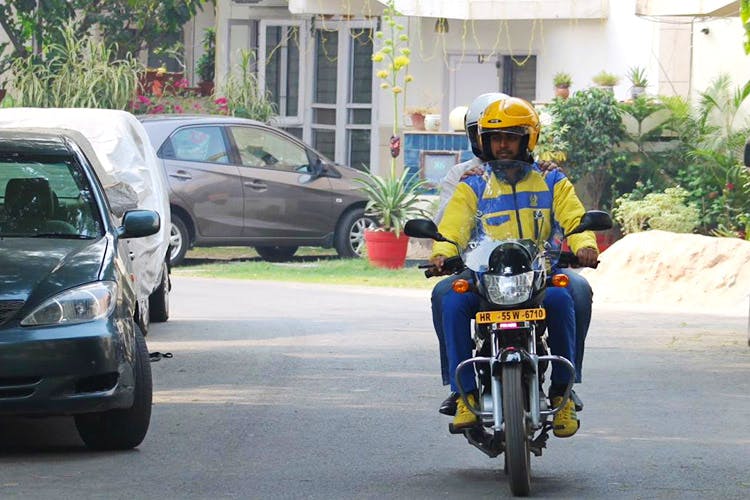

A System That Grew Faster Than Rules
India’s gig economy did not emerge through policy. It expanded through convenience.
Platforms like Rapido, Uber, Ola, Zepto, and Blinkit transformed how people move and how individuals earn. With minimal entry barriers, thousands of riders joined the system, turning personal vehicles into income-generating assets.
But speed came at a cost.
The system scaled rapidly without uniform regulation, and over time, the cracks became visible. Telangana’s proposed yellow plate policy for two-wheelers is an attempt to address those cracks—not by stopping the system, but by restructuring it.
From Informal Riding to Formal Transport
The policy introduces a fundamental shift in how two-wheelers used for commercial purposes are classified. Riders operating as bike taxis or delivery partners may now be required to register their vehicles under commercial (yellow plate) categories.
This transition brings with it additional requirements, including transport licenses, official batch identification, and regulatory compliance. What was once considered a flexible side activity begins to take the shape of a recognized profession.
This is not merely a rule change. It is a redefinition.
Why the Change Was Inevitable
For years, users have raised concerns about inconsistencies in app-based transport services. Cases where the rider arriving does not match the app profile, or where the vehicle differs from what was registered, have become increasingly common.
Such gaps are not minor technical errors. They represent a deeper issue—lack of accountability.
In urban environments, especially in Tier 1 cities, this creates legitimate safety concerns. The inability to verify identity in real time introduces risk, particularly for frequent users and women commuters who depend heavily on these services.
The current system prioritizes accessibility and speed. The proposed policy attempts to restore balance by introducing traceability and structure.
The Government’s Dual Strategy: Control with Incentive
What makes this policy interesting is that it is not purely restrictive.
The Telangana government appears to be pairing regulation with incentives. Commercial two-wheeler operators may benefit from reduced road tax, lower on-road vehicle costs, and discounts on government-backed insurance schemes. These measures are designed to encourage voluntary compliance rather than resistance.
It is a calculated approach.
By offering financial relief alongside regulatory requirements, the government is effectively saying:
“Formalize your work, and the system will support you.”
Impact on the Gig Workforce
For gig workers, the policy introduces both clarity and complexity.
On one hand, it legitimizes their role. Riders are no longer operating in a grey area but become part of a recognized transport ecosystem. This could improve customer trust and open doors to structured benefits in the future.
On the other hand, the ease of entry that once defined the gig economy may reduce. Licensing requirements, compliance procedures, and associated costs could discourage casual or part-time participants.
The shift is subtle but significant:
Flexibility gives way to structure.
Platform Accountability and Market Correction
For companies like Uber and Rapido, the policy introduces a new layer of responsibility.
The current model thrives on rapid onboarding and scale. Stricter regulations will likely slow this process, requiring better verification systems and closer alignment with government frameworks.
While this may temporarily affect supply, it strengthens long-term sustainability. A regulated ecosystem builds trust, and trust is what ultimately retains users.
The Toll Debate
Another dimension of this evolving policy landscape involves the possibility of toll systems for two-wheelers.
Authorities such as National Highways Authority of India are exploring whether two-wheelers—particularly those used extensively for commercial purposes—should contribute to highway usage costs.
With the growing presence of delivery fleets and bike taxis on national highways, two-wheelers are no longer negligible in terms of infrastructure impact.
If implemented, this could redefine cost structures for riders. However, commercial (yellow plate) vehicles may receive exemptions or structured benefits, further reinforcing the incentive to formalize.
Safety, Trust, and the Everyday User
At its core, this policy is about restoring trust.
For users, especially women, the assurance that a rider is verified, registered, and traceable changes the entire experience. It transforms uncertainty into predictability.
Convenience brought users to the platform.
Trust will keep them there.
A Shift Beyond Transport
This reform is not limited to mobility.
It reflects a broader transition in India’s digital economy—from unstructured growth to regulated expansion. The gig economy, once defined by its informality, is gradually being integrated into formal systems of governance and accountability.
Telangana’s approach may well serve as a model for other states navigating similar challenges.
Conclusion
Every system reaches a point where growth without structure becomes risk.
Telangana’s yellow plate policy represents that moment of correction. It may inconvenience some, slow down others, and invite criticism in the short term.
But it also introduces something the current system lacks:
Clarity. Accountability. Trust.
And in a network built on interactions between strangers, those three elements are not optional.
They are essential.
FAQ
1. What is the Telangana yellow plate policy for two-wheelers?
It is a proposed regulation requiring two-wheelers used for commercial purposes (bike taxis, deliveries) to be registered as transport vehicles with yellow number plates.
2. Who needs to get a yellow plate registration?
Riders working with platforms like Rapido, Uber, or delivery services using their vehicles commercially may need to register.
3. Will private two-wheelers be affected?
No, privately used vehicles remain unaffected unless used for commercial purposes.
4. Do riders need a special license for yellow plate bikes?
Yes, a commercial or transport driving license with proper endorsements (including batch number) may be required.
5. Why is the government introducing this policy?
To improve safety, accountability, and regulation in the rapidly growing gig transport sector.
6. Will this increase costs for riders?
Initially, yes due to licensing and compliance, but subsidies and tax benefits may offset some costs.
7. Are there any benefits for registered riders?
Yes, potential benefits include reduced road tax, insurance discounts, and legal recognition as transport operators.
8. Will two-wheelers have to pay toll on highways?
There is ongoing discussion by National Highways Authority of India about tolls for two-wheelers, especially commercial ones, though exemptions may apply.
9. How will this policy impact customers?
It is expected to improve safety, reliability, and trust in bike taxi and delivery services.
10. When will the policy be implemented?
The rollout is expected to happen in phases, with discussions currently underway.
Thesaurus
-
Regulation – Rules created to control a system
-
Compliance – Following laws or guidelines
-
Accountability – Responsibility for actions
-
Legitimacy – Being lawful or accepted
-
Infrastructure – Basic systems that support operations
-
Ecosystem – Interconnected system of elements
-
Subsidy – Financial support from the government
-
Traceability – Ability to track identity or activity
-
Formalization – Transition from informal to regulated system
-
Sustainability – Ability to maintain over time
External Links
-
Telangana Transport Department – Official transport authority
-
National Highways Authority of India – Highway and toll policies
-
Rapido – Bike taxi platform
-
Uber – Ride-hailing service
-
Ola – Indian mobility platform